
Bone Conduction Implant
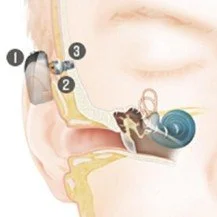
What Is a Bone Conduction Implant?
A bone conduction implant is a surgically placed hearing device that helps sound reach the brain through vibrations of the skull
Bone Conduction Implant vs. Traditional Hearing Aid
A traditional hearing aid sends amplified sound through the ear canal. A bone conduction device bypasses the ear canal, eardrum, and middle ear entirely. It sends vibration directly through the skull bone to brain.
Situations where bone conduction devices make more sense include
Chronic drainage or ear infections
Narrow ear canal or malformations
Single-sided deafness (SSD)
Many patients experience:
Clearer sound quality
Better speech understanding
Improved sound awareness from the deaf side (in SSD)
Who Is a Candidate?
Bone conduction implants are helpful when:
Hearing aids cannot be worn comfortably
Chronic ear infections prevent traditional hearing aid use
There is congenital absence or malformation of the ear canal
One ear has no usable hearing
What to Expect
Before surgery
Hearing test and formal device candidacy evaluation
Trial with a headband or softband device
Imaging
Medical evaluation
Surgery
Typically outpatient
Less than 1 hour
Small incision behind the ear
After surgery
Device activation in 2-4 weeks postop
Programming adjustments with your audiologist as needed
This content is for educational purposes only and is not medical advice. Always consult a qualified healthcare professional regarding your specific situation.